Workforce Alignment
It’s Not College Versus Trades. It’s Whether Educators and Employers Plan Together

Most regional workforce efforts begin the same way. A grant arrives. Partners gather. Employers describe the roles they can’t fill. Educators describe the programs they can build. The workforce board describes the people it serves. The economic development agency describes the companies it hopes to attract. Everyone leaves with good intentions and a plan.
Somewhere in that first meeting, someone usually asks whether the region needs more four-year graduates or more people in the skilled trades. It’s the wrong question. Most regions need both, and the real problem is that the people deciding what to teach and the people deciding whom to hire rarely plan together.
Two or three years later, many of those efforts are gone. Ask what happened and you usually hear the same three words: “lost its funding.”
That’s true, but it skips the more useful question: why didn’t anyone keep paying for it?
It starts with fragmented funding
Employers, educators, workforce boards, economic developers and funders make connected decisions, but they make them separately, and fund them separately. Each partner works within its own mandate, its own funding stream and its own timeline. Grant proposals follow what one funder thought was needed, rather than a problem the partners defined together.
A one-year grant rarely solves a ten-year workforce problem. And the most important regional work, the coordination that keeps partners pointed at the same jobs, happens between organizations, not inside a single program budget. No budget line covers it, so it rarely gets funded. Grants pay for programs, and this part falls between them.
Here’s what that looks like. In one state, two federal grants were awarded the same year for short-term healthcare and tech training. One, over $10 million, is building statewide credential systems across 15 colleges. The other, about $2.5 million from a different agency, adds certificates for a rural region. They answer to different agencies, rules and timelines, and we found no shared plan connecting them. Both may be good programs. But when that much money moves without agreement on a state direction, coordination rarely shows up early enough for the work to scale. By the time anyone tries to connect the pieces, the money is committed and the designs are locked in.
That’s the cost of silo thinking: each grant optimized for its own goals, its own funder, its own report. Collective thinking asks a different question first: what does the state need, and how does each investment fit? Answer that before the money moves, and good programs don’t just finish. They scale into a new operating process the whole state owns, which is a win-win for funders, educators and employers.
Then come the consequences
Working together shouldn’t mean giving up what you’re already funded to do. But that’s how it often plays out. When the first grant ends, every partner returns to its own goals, its own reports, and its own calendar. The shared effort has no owner, and no one can show what the partners produced together. A single program report can show that a program ran. It can’t show that a region moved.
What changes with a shared understanding
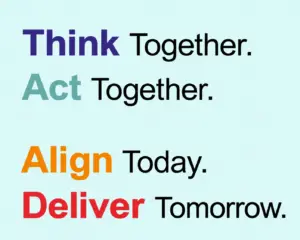
The answer is not to stop funding good programs. What they need alongside them is agreement, made early, on what the work should deliver.
Three steps, in order:
- Agree on the results that matter, before the money has been spent.
- Give each partner a share it owns. When roles, ownership and decisions are agreed and shared, the work survives staff turnover and the grant cycle.
- Show funders shared results. The next funding decision follows the agreement, not the calendar.
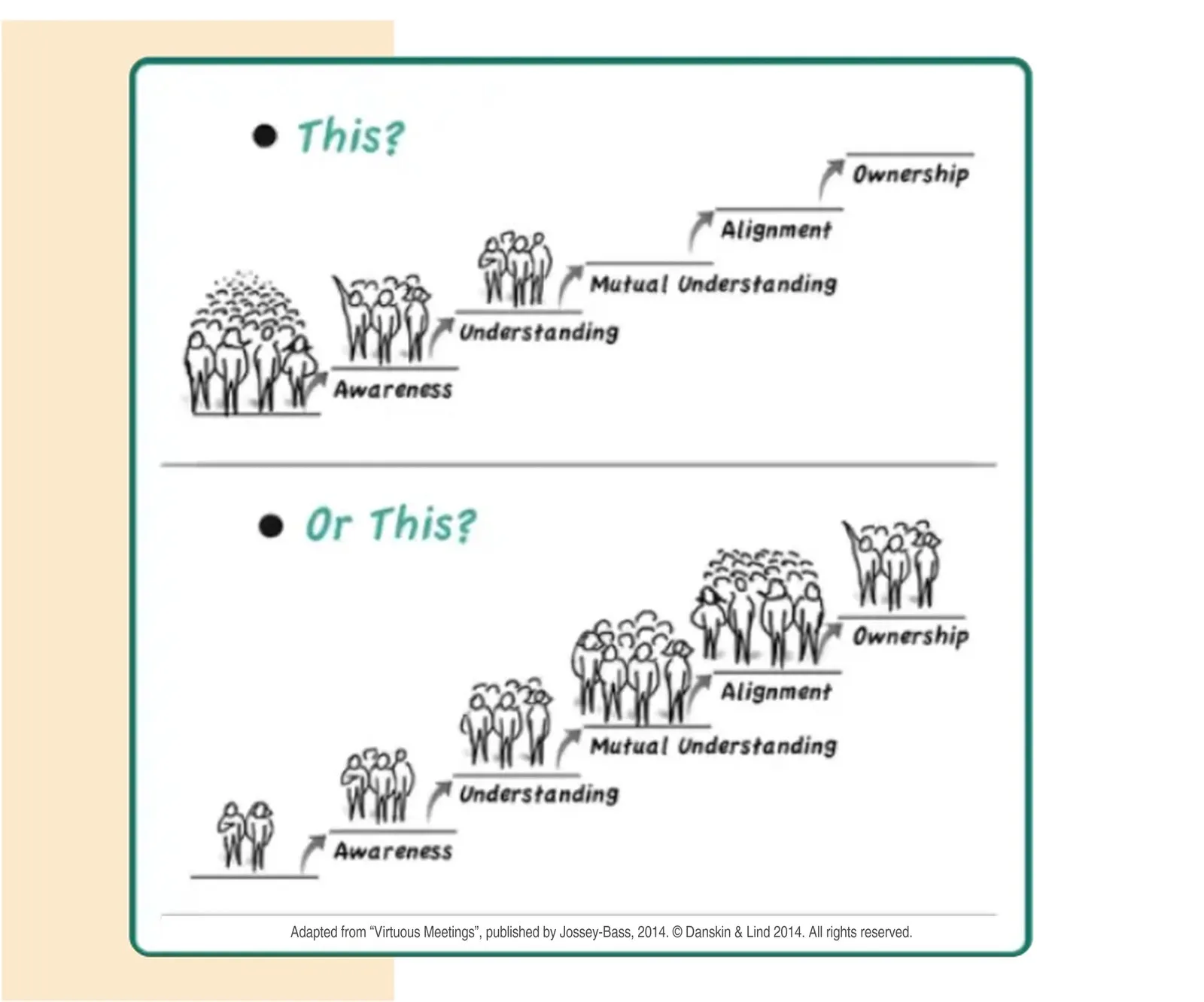
Who convenes matters, too. An economic development agency is often a natural convener, because attracting and keeping businesses depends on employers, educators and workforce partners who can show a talent pipeline that is real.
How The WebStudy Foundation helps
The WebStudy Foundation is a woman-led 501(c)(3) nonprofit (EIN 30-1015810) that helps colleges, employers, and funders in a region agree on what they are working toward, before the money is spent. These groups often do good work in parallel without seeing what the others are doing. The foundation brings them together to see where their efforts don’t line up, agree on the results that matter most, and commit to what they will do together. Its process, called CapacityWorks™, keeps the programs and partnerships a region already has and helps them point in the same direction.
Help the work outlast the grant this Giving Tuesday
Giving Tuesday, on Dec. 1, is a national day of generosity that follows Black Friday and Cyber Monday. Our campaign, “Agree on the Results That Matter, Before the Money Has Been Spent,” pays for the facilitated work that gets a region’s colleges, employers, workforce and economic development partners, and funders to agree on shared results before money is spent. Our goal is to fund 3 to 6 regional coalitions. Regions and coalitions are candidates who could receive support, subject to fundraising and selection.
- Give: Donate to The WebStudy Foundation
- Learn how the work is done: Our approach
- Talk with us about your region: [email protected] · 888-326-4058
- Follow along: The WebStudy Foundation on LinkedIn
Agree on the Results That Matter, Before the Money Has Been Spent.
Giving Tuesday · December 1, 2026