What Alignment Looks Like
From being right to getting it right
Why smart people keep deciding alone.
Most leaders are rewarded for having answers, so deciding alone feels safer than deciding together.
Employers know what they're hiring for. Educators know what their programs produce. Workforce leaders know the labor market. Economic developers know where growth is coming. Funders know where the money is going. Each view is valuable. None is complete, so programs and openings get built without seeing each other.
For a few hours, you set aside the habits that serve you well inside your own organization: defending your expertise, pushing a solution too early, protecting turf. You don't give up your autonomy or your programs. The process guides understanding; it doesn't expose or blame. Decide together. Own it together.
Not because those habits are wrong, but because nobody can see the whole picture from one seat.
The goal isn't to decide who's right. It's to see what everyone knows, together, so nobody's exposed alone and everybody sees what they couldn't see on their own.
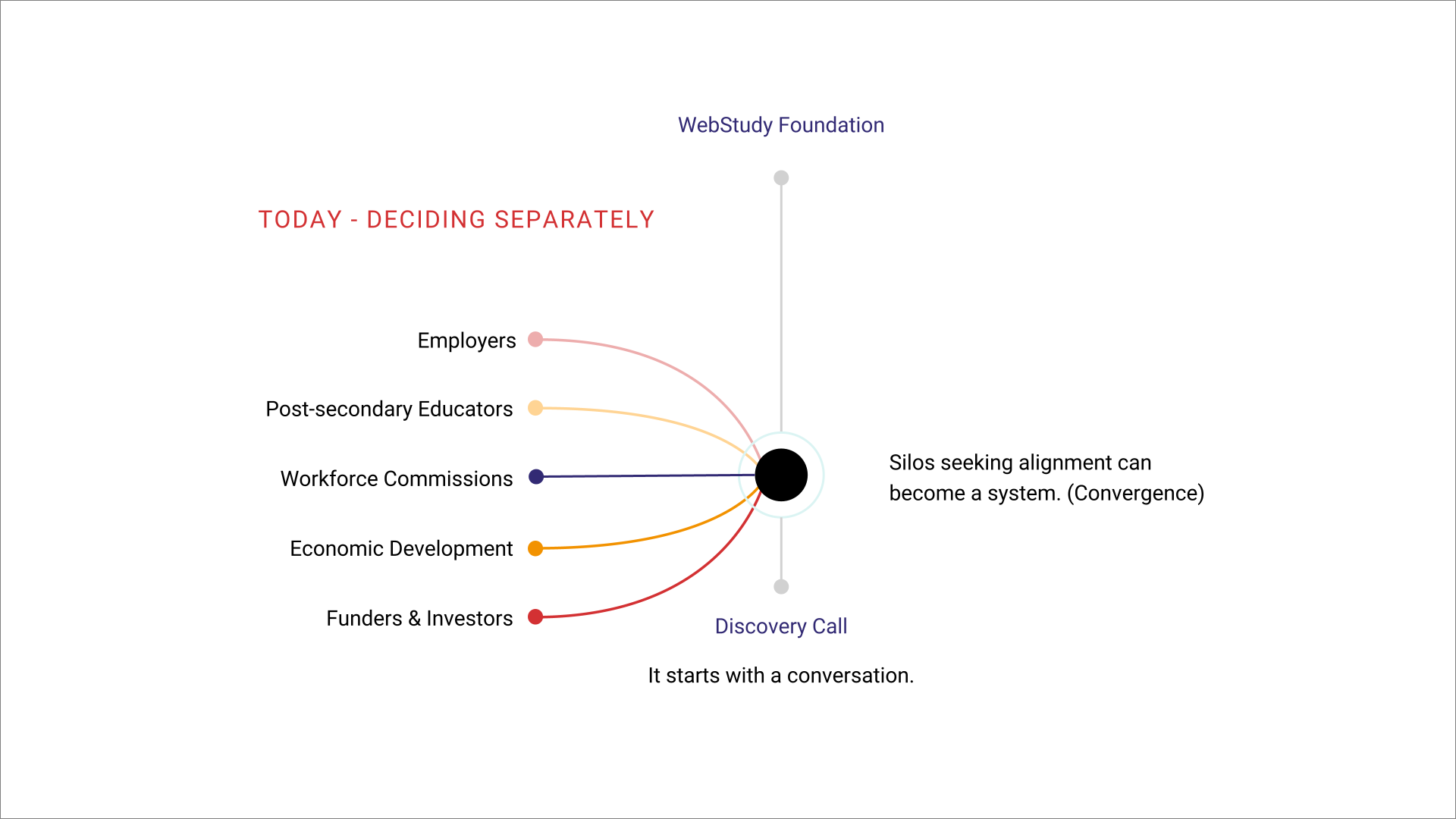
That's the shift from being right to getting it right.

What your region leaves with
- Conveners: a decision the whole region can stand behind.
- Educators and employers: what each side knows about the other, before you commit money or seats.
- Funders: one shared definition of success across grantees.
- Everyone: clear roles, ranked priorities, and next steps your region owns.
How it works.
CapacityWorks™, adapted from Collaboration Arts' participatory framework, puts everyone's view on one screen, so the mismatch between what's being taught and what's being built shows up while there's still time to act.
Unlike a convening where you sit and listen, you work: you add what you know, see what others know, and decide together what comes first.