What we discovered was not a shortage of expertise. It was a shortage of shared understanding. Most workforce systems are built around exchanging information. Far fewer are designed to help stakeholders build a common view of what the future requires.
No single organization sees the whole system.
Employers see one piece
Educators see another
Workforce boards see another
Economic developers see another
Funders see another
Each perspective is valuable. None is complete.
But the deeper insight came from a pattern that kept repeating across every region, every coalition, every well-funded initiative.
As a result, the future workforce is often planned from partial views rather than a shared understanding of future workforce demand.
Workforce commission directors knew the data cold
Post-secondary presidents were redesigning entire programs
Economic development leaders recruited employers into the region
All of them working hard.
All of them looking for deeper explanations. And in doing so, all of them missing the same structural truth:
The problem wasn’t what they knew. It was that their intelligence was being applied inside a silo – producing sophisticated answers to the wrong question.
The smarter you are within your vantage point, the more convincing your partial view feels. That’s what makes this problem so persistent – and so invisible to the people closest to it.
WebStudy Foundation was built by people who had stood on enough sides of this problem to finally see it whole.
How WebStudy Foundation Came Together
WebStudy Foundation was not built from theory.
It emerged from decades of experience across workforce development, corporate learning, higher education technology, systems thinking, and collaborative facilitation.
Founder Gisele Larose spent years developing corporate learning strategies for thousands of employees before investing with her husband Curt Corbi in educational technology serving colleges and universities across eight states.
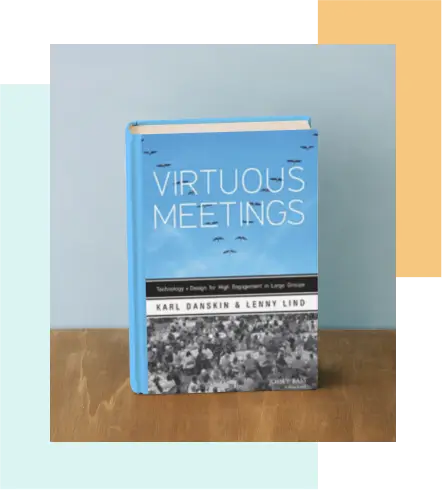
To build a solution worthy of the problem, they partnered with Todd Erickson, principal of Collaboration Arts, whose work is influenced by Lenny Lind, author of Virtuous Meetings.
For more than two decades, Todd has helped governments, nonprofits, corporations, and communities design collaborative processes that move diverse stakeholders from conversation to coordinated action. Todd brings 20+ years of designing proven architecture for collaborative change: over 2,000 collaborative gatherings supported across government, corporate, nonprofit, and community sectors.
Each of their perspectives combined revealed something larger:
WebStudy Foundation researched the web of initiatives, relationships, and gaps between siloed efforts – identifying state and regional coalitions seeking change but hampered by insufficient funding and fragmented initiatives.
“No single organization can see beyond its own vantage point – and therefore cannot meet a community’s learning and earning needs on its own.”
That insight led to a simple mission:
Help regions move from fragmented planning toward coordinated action.
We don’t facilitate conversations about alignment—we design the conditions that make alignment possible.
From Siloed Systems to Shared Solutions
The challenges in front of us are too great to rely on conferences and sage-on-stage meeting formats. WebStudy Foundation enables educators and employers to turn silos into systems, region by region.
1
Engage every voice
2
Synthesize insights as they emerge
3
Build shared ownership of results
Before Your Next Step Moves Forward
Do you know whether your region’s stakeholders are aligned early enough to make it scale?
Before regions can align decisions, they must first understand where perspectives diverge