Fund Change

Invest in Systemic Transformation

Philanthropy is moving from funding initiatives to funding the coordination capacity of whole systems.

THE FUNDING CHALLENGE

Philanthropy is undergoing a structural transition. Many foundations have evolved from programmatic charity toward strategic, inquiry-driven grantmaking. Grant-making timelines are out-dated for today’s pace of rapid change. New tensions—ambiguity, persistent power asymmetry, fragmented investments, and learning disconnected from durable capital—signal not failure but transition toward ecosystem orchestration.

THE FUNDING REALITY

Philanthropy has evolved its mindset faster than its infrastructure, producing inquiry without stability, collaboration without authority, learning without capital alignment, and convening without governance.

THE COMMUNITY REQUIREMENTS

Regional prosperity increasingly depends on whether communities can prepare talent for the jobs that are emerging—not the jobs of the past. Yet across the United States, workforce demand is accelerating faster than education and training systems can respond. By 2032, the economy is projected to require more than 5 million additional workers with postsecondary credentials, even as retirements and technological change reshape nearly every industry.

The consequences are already visible. Employers struggle to hire qualified workers, productivity slows, and economic growth opportunities bypass regions unable to supply job-ready talent. Globally, nearly two-thirds of employers identify skills gaps as the primary barrier to transformation, while an estimated 39% of current workforce skills may become obsolete within this decade.

Despite significant public and philanthropic investment, many workforce initiatives fail to scale—not because of insufficient funding or effort, but because educators and employers continue to plan from different realities. Programs are launched before regions establish shared agreement on future job demand, leaving talent pipelines misaligned with economic need.

The urgency for funders is no longer simply supporting new initiatives—it is ensuring that regional decisions are aligned early enough to produce lasting workforce outcomes.

WebStudy Foundation addresses this gap by convening educators, employers, and regional leaders in technology-facilitated, high-engagement working sessions that align decisions around future job demand – before investments in programs, and pathways are locked in. 

The result is a coordinated talent strategy that reduces hiring risk, strengthens regional competitiveness, and ensures philanthropic capital produces durable economic impact.

WebStudy Foundation is the next era of philanthropy centering on ecosystem orchestration – aligning actors, incentives, infrastructure, and capital to enable whole-system progress

THE FUNDING CHALLENGE

Philanthropy is undergoing a structural transition. Many foundations have evolved from programmatic charity toward strategic, inquiry-driven grantmaking. Grant-making timelines are out-dated for today’s pace of rapid change.  New tensions—ambiguity, persistent power asymmetry, fragmented investments, and learning disconnected from durable capital—signal not failure but transition toward ecosystem orchestration.

THE FUNDING REALITY

Philanthropy has evolved its mindset faster than its infrastructure, producing inquiry without stability, collaboration without authority, learning without capital alignment, and convening without governance.

THE COMMUNITY REQUIREMENTS

Regional prosperity increasingly depends on whether communities can prepare talent for the jobs that are emerging—not the jobs of the past. Yet across the United States, workforce demand is accelerating faster than education and training systems can respond. By 2032, the economy is projected to require more than 5 million additional workers with postsecondary credentials, even as retirements and technological change reshape nearly every industry.

The consequences are already visible. Employers struggle to hire qualified workers, productivity slows, and economic growth opportunities bypass regions unable to supply job-ready talent. Globally, nearly two-thirds of employers identify skills gaps as the primary barrier to transformation, while an estimated 39% of current workforce skills may become obsolete within this decade.

Despite significant public and philanthropic investment, many workforce initiatives fail to scale—not because of insufficient funding or effort, but because educators and employers continue to plan from different realities. Programs are launched before regions establish shared agreement on future job demand, leaving talent pipelines misaligned with economic need.

The urgency for funders is no longer simply supporting new initiatives—it is ensuring that regional decisions are aligned early enough to produce lasting workforce outcomes.

WebStudy Foundation addresses this gap by convening educators, employers, and regional leaders in technology-facilitated, high-engagement working sessions that align decisions around future job demand – before investments in programs, and pathways are locked in. 

The result is a coordinated talent strategy that reduces hiring risk, strengthens regional competitiveness, and ensures philanthropic capital produces durable economic impact.

WebStudy Foundation is the next era of philanthropy centering on ecosystem orchestration – aligning actors, incentives, infrastructure, and capital to enable whole-system progress

Invest in the Glue, Not Just the Parts

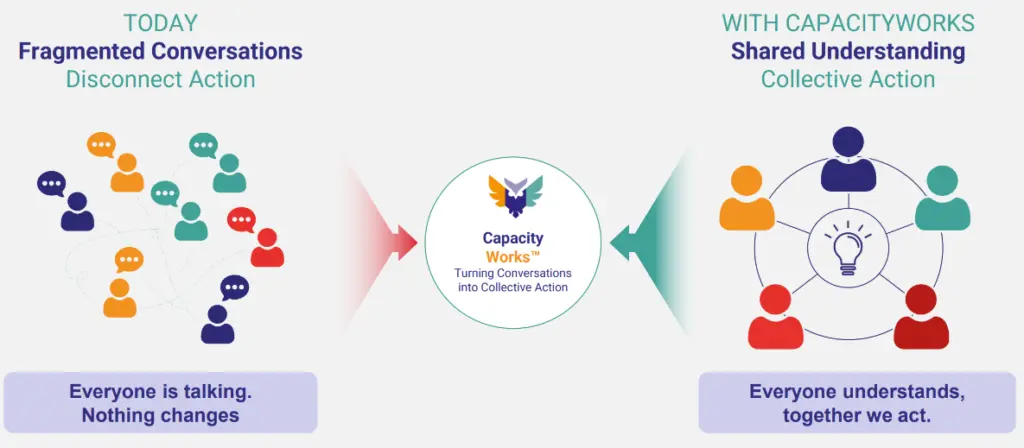
The workforce system isn’t failing for lack of effort — it’s failing for lack of connection. Every year, billions in grant funding support well-intentioned programs that:

  • Target narrow issues
  • Operate in isolation
  • End before real momentum takes root

Traditional grant cycles move too slowly for today’s pace of change. What’s missing isn’t effort — it’s the process that connects it.

FROM TRANSACTIONAL GRANTMAKING to ECOSYSTEM ORCHESTRATION

Core premise:

  • Enduring progress requires aligning the conditions, incentives, infrastructure, and actors of whole systems.
  • This transition resolves the tensions visible in today’s philanthropic practice.

Characteristics

  • Multi-year capital aligned to shared system outcomes
  • Convening as core operating infrastructure, not an auxiliary activity
  • Learning directly connected to resource allocation and governance
  • Cross-funder coordination and pooled legitimacy
  • Investment in interoperability, incentives, and decision architecture

FROM TRANSACTIONAL GRANTMAKING to ECOSYSTEM ORCHESTRATION

Core premise:

Enduring progress requires aligning the conditions, incentives, infrastructure, and actors of whole systems.
This transition resolves the tensions visible in today’s philanthropic practice.

Characteristics

  • Multi-year capital aligned to shared system outcomes
  • Convening as core operating infrastructure, not an auxiliary activity
  • Learning directly connected to resource allocation and governance
  • Cross-funder coordination and pooled legitimacy
  • Investment in interoperability, incentives, and decision architecture

Why It Matters to Funders:

Your gift isn’t just a grant. It’s an investment in a community’s capacity to lead its own future. By funding Collaboration-as-a-Service™ (CaaS), you help coalitions align faster, act smarter, and sustain momentum long after a single project ends.

For Foundations

Fund the process that connects and amplifies the programs you already support.

For Corporate Partners

You’re not just hiring talent, you have a vested interest in shaping what that talent becomes. Integrate your hiring needs into regional planning to shorten time-to-hire and reduce turnover.

For Family Foundations

Your mission is personal and generational. Support structured collaboration that helps your community lead its own future.

For Individual Donors

You care about outcomes—not waste, duplication, or performative progress. Lift opportunities for families and workers

A 10-Year Sunset Strategy

Philanthropy stands at an inflection point.  Experimentation is needed to transition to ecosystem orchestration. There is structural misalignment in the philanthropy–nonprofit system. The philanthropic operating model is shifting from programmatic transactions to ecosystem. The defining work of the next era is not simply better grants or deeper insight, but the creation of shared decision infrastructure capable of aligning whole systems.

As an aspiring philanthropist, I’ve spent six years researching and engaging numerous stakeholders in pro bono contributions of their time that exceeds a value greater than $1,500,000.  We chose not to launch another software application but to partner with experts in systems design to stimulate long-term regional prosperity. Our current capital campaign is seeking generous contributions to match that amount to support the next chapter.

The WebStudy Foundation may remain in existence for a decade and then no longer be needed.  Our vision is to sunset operations once we design and facilitate:

  • 700 convenings
  • 75 regions

Our facilitators and subject matter expert moderators are the capable stewards that will continue any consulting, project management or fundraising management, as for-profit providers, to prepare our country for the 22nd century. 

With your contribution, you’ll be remembered for pioneering where this infrastructure emerges, where learning will translate into legitimacy and where capital will reinforce coordination, and ecosystems—not isolated programs.  

Together, we’ll create an alternative model of philanthropy to finance the true engines of transformation.

With funding and outcomes, the Baby Boomerangs will drive the redesign of entire systems. Higher education and workforce development are converging to produce:

  • Employers with strong talent pipelines, faster
  • Workers welcoming continuous upskilling
  • Educators upgrading processes to adapt curriculum content in digestible pieces, quickly

Collaboration That Lasts

Every system is made up of people, roles, and relationships. 

Ask yourself: “Who might we collaborate with to better prepare for what’s coming?”

By investing in transformative collaboration, you help communities build lasting pathways from learning to earning.

Your Impact as a Visionary Investor

Your investment doesn’t just fund programs. It fuels transformation.
You make it possible for regions to:

  • Scale solutions, not duplication
  • Collaborate faster, with more clarity
  • Build systems that last


Your Impact as a Visionary Investor

Your investment doesn’t just fund programs. It fuels transformation.
You make it possible for regions to:

  • Scale solutions, not duplication
  • Collaborate faster, with more clarity
  • Build systems that last

Ready to Drive Systemic Transformation?

Name(Required)

Name(Required)

Name(Required)